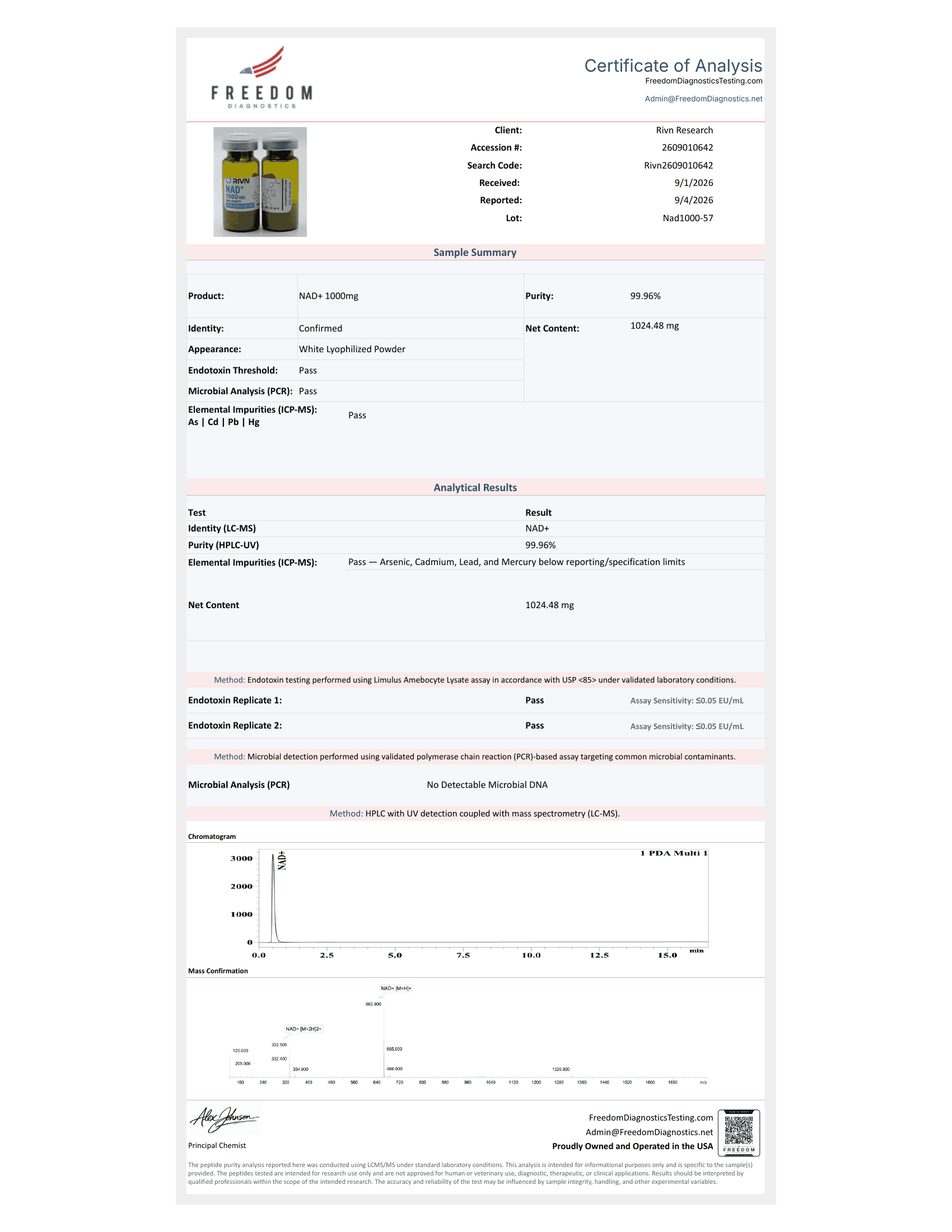
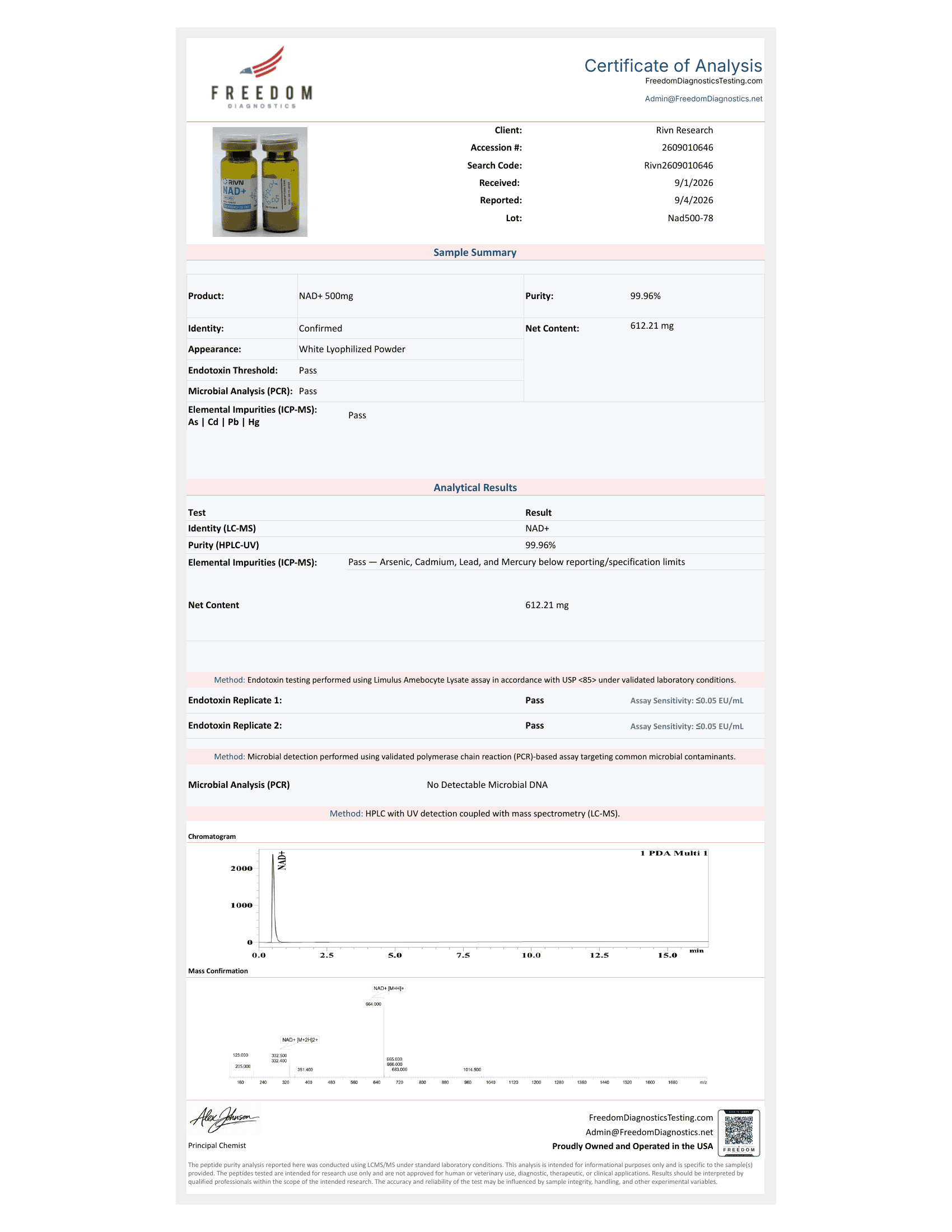
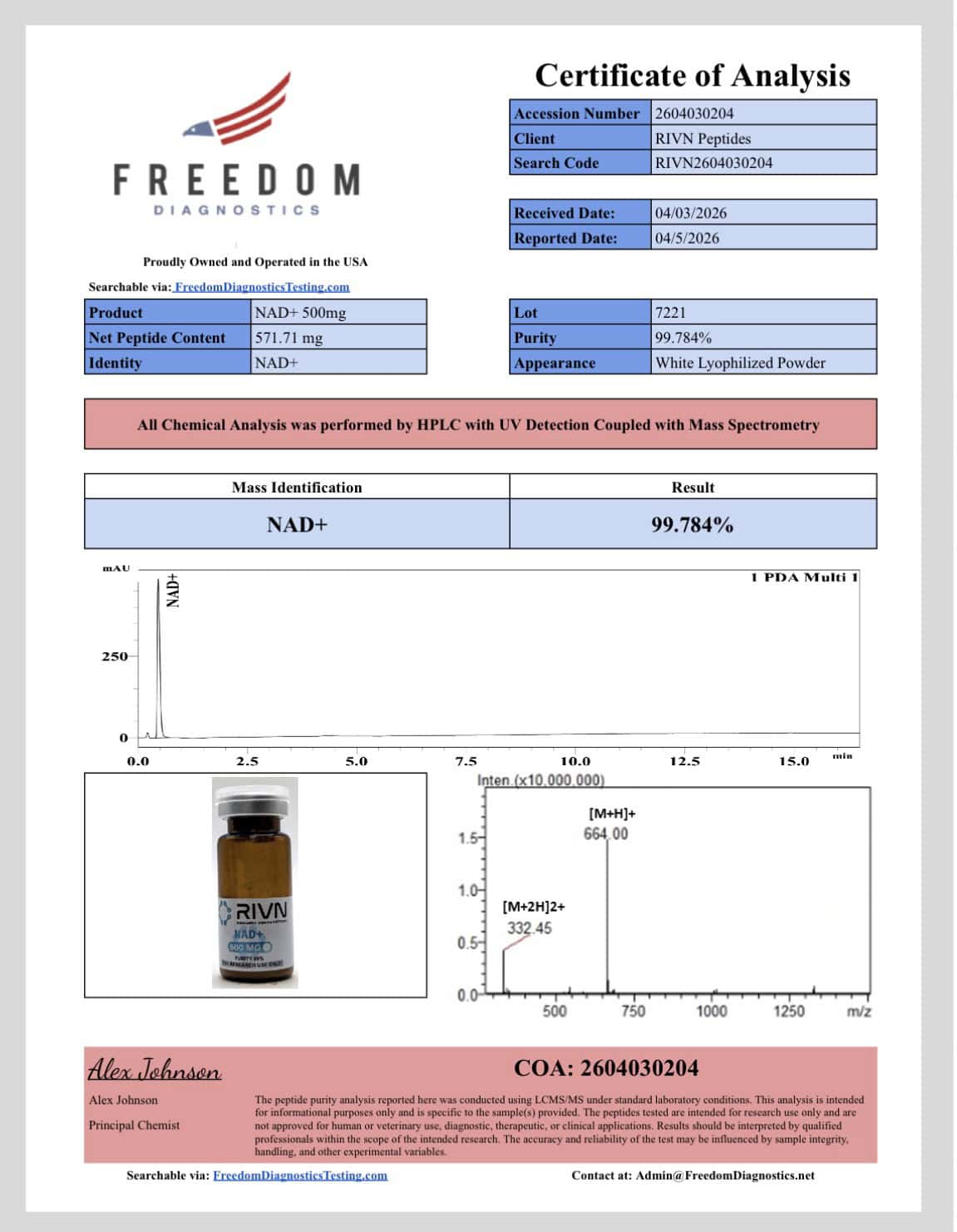
NAD+ (Nicotinamide Adenine Dinucleotide) 500MG is a high-purity research compound widely studied in cellular biology and biochemical research. It is a naturally occurring coenzyme present in all living cells and plays a fundamental role in energy metabolism, redox reactions, and mitochondrial function.
In research environments, NAD+ is primarily valued for its role as an essential electron carrier in metabolic pathways. It cycles between oxidized (NAD+) and reduced (NADH) forms, supporting critical processes involved in ATP production and overall cellular energy regulation. Because of this, NAD+ is frequently used in studies focused on mitochondrial activity, oxidative stress response, and enzymatic function.
Scientific Background
NAD+ is a pyridine nucleotide composed of two nucleotides joined through phosphate groups. It is essential for hundreds of enzymatic reactions involved in oxidation-reduction processes and metabolic regulation.
Key roles include:
- Electron transfer in redox reactions
- Regulation of cellular respiration and energy production
- Participation in DNA repair pathways via PARP enzymes
- Support of sirtuin-related cellular signaling mechanisms
Because of these functions, NAD+ is widely used in research models related to cellular aging, metabolic stress, and genomic stability.
Research Applications
NAD+ 500MG is commonly used across a variety of laboratory research areas:
- Mitochondrial function and ATP production studies
- Redox biology and oxidative stress research
- Enzymatic activity and dehydrogenase reaction studies
- Cellular aging and senescence models
- Metabolic pathway and energy regulation research
Quality & Compliance
Each batch of NAD+ 500MG is handled under strict quality control standards to support consistency and reliability in research applications. The compound is intended exclusively for laboratory research use and is supplied with documentation suitable for analytical verification and internal lab use.
All materials are manufactured, packaged, and distributed under controlled conditions to maintain stability and purity throughout handling and shipping.
Handling & Storage
NAD+ 500MG is supplied in lyophilized form to ensure stability during storage and transport.
Before reconstitution, it should be stored in a cool, dry place away from light and moisture. After preparation, refrigeration at 2–8°C is recommended. For long-term storage, freezing at -20°C is commonly used in research settings. Repeated freeze–thaw cycles should be avoided to maintain compound integrity.
Product Note
This product is strictly intended for laboratory research use only.
All compounds are supplied in powder form and require reconstitution before use. No dosing instructions or human/animal usage guidance are provided or implied. Users are responsible for compliance with all applicable laboratory and regulatory standards.
Frequently Asked Questions (FAQs)
- What is NAD+ 500MG used for in research?
NAD+ 500MG is used in studies of cellular energy production, mitochondrial function, redox balance, and enzyme activity. It helps researchers evaluate metabolic processes at a cellular level.
- Is NAD+ a peptide?
No, NAD+ is a coenzyme, not a peptide. It is a naturally occurring molecule involved in metabolic and redox reactions in all living cells.
- Why is NAD+ important in scientific research?
NAD+ is essential for ATP production, DNA repair processes, and enzyme function. It is widely studied in mitochondrial biology, aging models, and metabolic research.
- How should NAD+ 500MG be stored?
Before reconstitution, store in a cool, dry place away from light. After reconstitution, refrigerate at 2–8°C. For extended storage, freezing at -20°C is recommended.
- Is NAD+ 500MG safe for human use?
No. This product is strictly for laboratory research use only and is not intended for human or animal consumption, medical use, or diagnostics.