KPV 10MG is a synthetic tripeptide supplied as a lyophilized research compound for qualified laboratory and analytical research. KPV consists of the amino acid sequence Lysine-Proline-Valine and is also identified as α-MSH (11-13).
Its small, defined molecular structure makes KPV a useful research material for studies involving peptide signaling, cellular communication, molecular interactions, and experimental biological pathways. The 10mg format provides a clearly documented quantity for laboratory inventory, sample tracking, and controlled research workflows.
KPV 10MG specifications
- Product Name: KPV 10MG
- Category: Research Peptides
- Active Compound: KPV
- Strength: 10mg
- Form: Lyophilized powder
- Molecular Formula: C₁₆H₃₀N₄O₄
- Molecular Weight: 342.44 g/mol
- CAS Number: 69933-88-6
- Synonyms: Lysine-Proline-Valine; α-MSH (11-13)
- Application: Laboratory research
These identifiers can be used for laboratory records, compound verification, inventory management, and analytical documentation.
What is KPV?
KPV is a tripeptide composed of lysine, proline, and valine. It corresponds to the C-terminal sequence of α-melanocyte-stimulating hormone (α-MSH), making it a subject of research involving peptide signaling and biological pathway interactions.
Because of its relatively small peptide structure, KPV is also useful in research focused on peptide characterization and structure-function relationships. Researchers may investigate the compound independently or compare it with related peptide sequences to better understand molecular interactions under controlled experimental conditions.
Research findings should always be interpreted according to the specific experimental model, methodology, and analytical conditions used.
Areas of scientific interest
KPV may be incorporated into laboratory investigations involving:
- Peptide signaling
- Cellular communication
- Molecular pathway research
- Peptide structure-function studies
- α-MSH-related research
- Cellular response models
- Inflammatory pathway research
- Gastrointestinal research models
- Comparative peptide investigations
- Biochemical characterization
The terms KPV peptide anti-inflammatory and KPV peptide gut health are commonly associated with online searches surrounding the compound. These phrases describe areas of research interest rather than claims about product outcomes.
Why choose KPV 10MG?
For laboratories working with small peptide research compounds, clear chemical identification and a defined quantity can simplify material management and experimental planning.
KPV 10MG provides:
- Defined molecular identity: Molecular formula, molecular weight, CAS number, and synonyms are provided.
- 10mg quantity: A clearly specified amount for laboratory inventory and research planning.
- Lyophilized presentation: Supplied as a dry powder for appropriate storage before preparation.
- Established peptide sequence: The Lysine-Proline-Valine sequence provides a clear structural reference.
- Comparative research potential: Can be evaluated alongside related peptide materials in controlled studies.
Researchers should determine the suitability of KPV according to the requirements of their individual research project.
KPV peptide research
KPV has attracted research interest because of its relationship to the α-MSH peptide sequence and its small molecular structure. Laboratory investigations may examine its interactions with cellular pathways, peptide-mediated signaling, and molecular response mechanisms.
Research involving KPV can also form part of broader studies comparing short peptide sequences and their respective biological characteristics. Such studies can provide a controlled framework for evaluating differences between related compounds.
KPV peptide COA and documentation
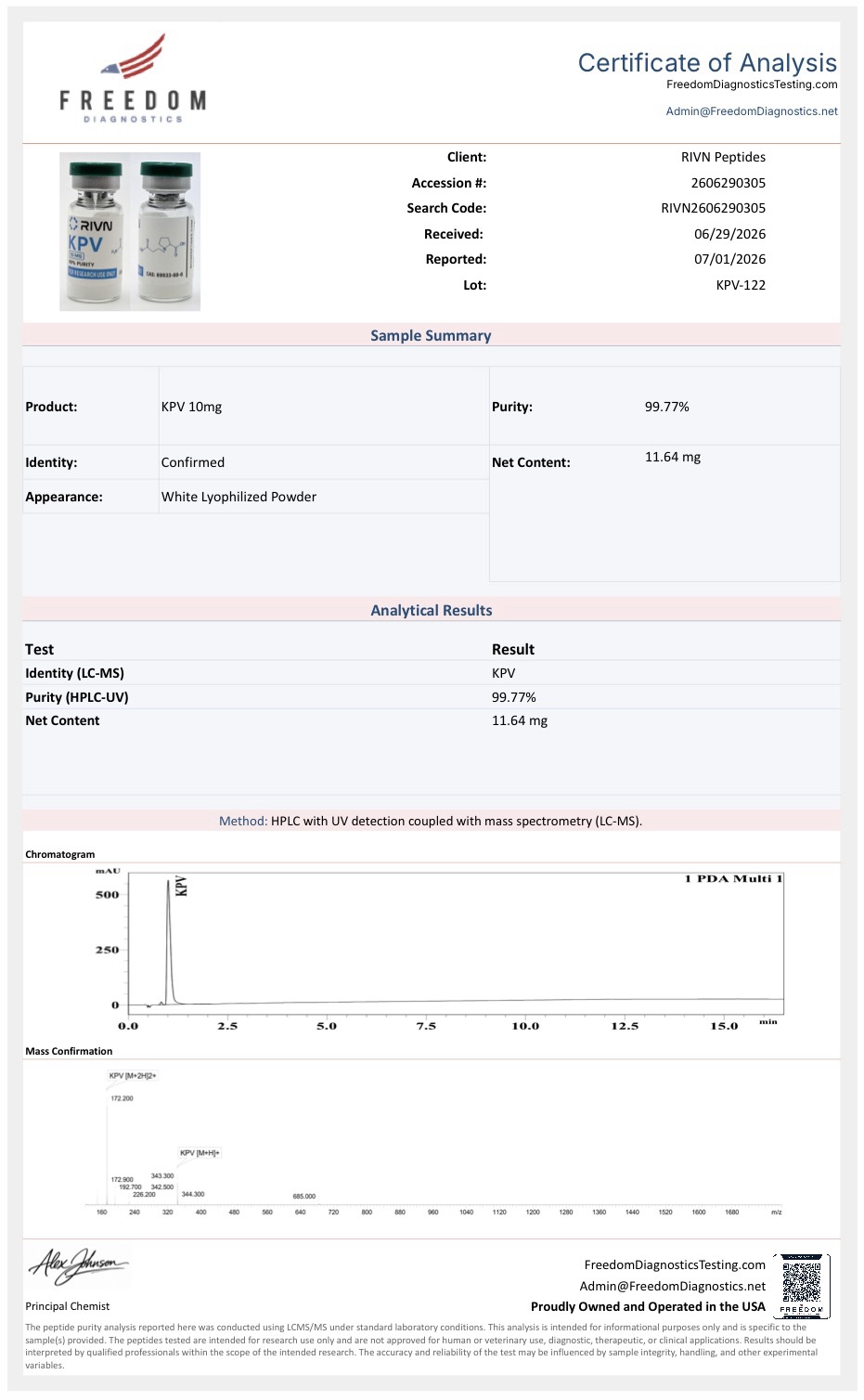
A KPV peptide COA can be an important part of research documentation when batch-specific analytical information is provided. Researchers can retain the applicable certificate alongside product and sample records for organized laboratory traceability.
Relevant documentation may include:
- Product and batch identification
- Stated purity information
- Molecular information
- Analytical results
- Quantity
- Storage records
Where additional analytical verification is necessary, laboratories should establish their own testing methods and acceptance criteria according to their research requirements.
KPV 10MG procurement information
Researchers searching to KPV buy online should review the complete product information before procurement. Important considerations can include product identity, stated specifications, batch documentation, packaging, and research-use classification.
The overall product documentation and specification should be considered alongside cost. Pricing may vary according to current availability, packaging, promotions, and ordering requirements.
Researchers looking for a KPV peptide supplier in the USA should also consider whether the supplier provides appropriate product information and documentation for their laboratory’s procurement process.
Research use only
KPV 10MG is supplied strictly for scientific, analytical, and laboratory research. It is intended for qualified research environments and controlled experimental applications.
Researchers are responsible for following applicable institutional requirements, laboratory SOPs, and relevant regulations when handling, preparing, analyzing, storing, and disposing of research materials.
Frequently asked questions
What is KPV 10MG?
KPV 10MG is a synthetic tripeptide research compound consisting of Lysine-Proline-Valine and supplied as a lyophilized powder for qualified laboratory research.
What is KPV studied for?
KPV may be investigated in research involving peptide signaling, cellular communication, α-MSH-related pathways, molecular interactions, gastrointestinal research models, and inflammatory pathway studies.
What is the molecular formula of KPV?
The molecular formula listed for KPV is C₁₆H₃₀N₄O₄, with a molecular weight of 342.44 g/mol.
What should researchers look for in a KPV peptide COA?
A batch-specific COA may provide analytical information such as product identification, purity data, and batch details. Researchers should review the documentation associated with their specific research material.
How should KPV 10MG be stored?
Store the unopened lyophilized material in a cool, dry place away from direct light. After reconstitution, refrigeration should follow applicable laboratory procedures. For extended storage, -20°C is recommended where appropriate to help maintain peptide integrity.