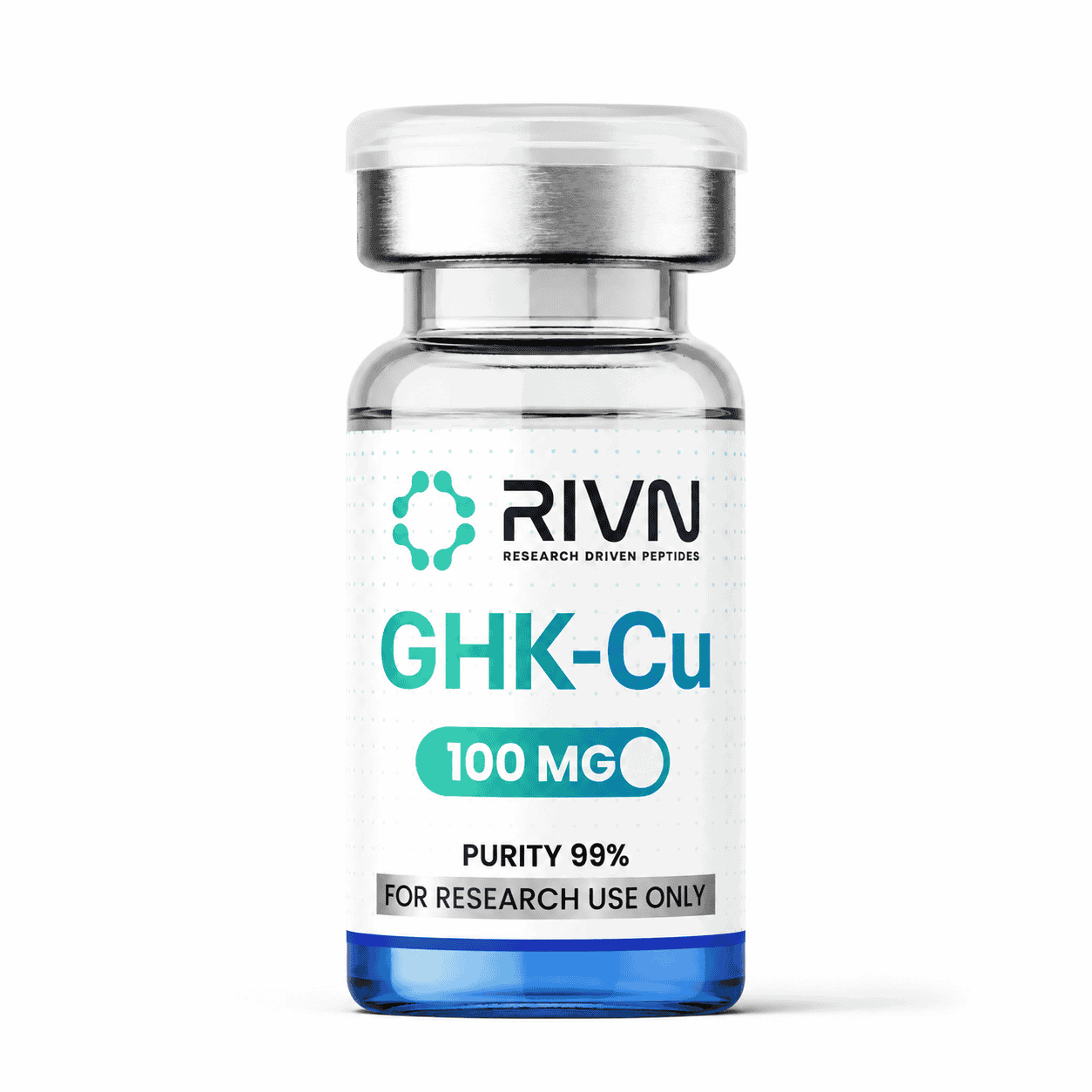
GHK-Cu 100MG is a defined research peptide supplied in lyophilized powder form for qualified laboratory and scientific investigation. GHK-Cu is a copper-binding tripeptide that has been widely studied in research involving peptide signaling, extracellular matrix biology, cellular communication, and molecular interactions.
Its well-characterized structure and association with copper-dependent biological pathways make GHK-Cu a useful material for experimental research involving cellular and connective tissue models. The 100mg format provides a clearly documented quantity for laboratory inventory, sample tracking, and controlled research workflows.
GHK-Cu 100MG specifications
- Product Name: GHK-Cu 100MG
- Active Compound: GHK-Cu
- Strength: 100mg
- Form: Lyophilized powder
- Classification: Copper-binding tripeptide
- Research Application: Laboratory and analytical research
- Product Format: Single research peptide
The defined product information can be used for laboratory records, compound identification, inventory management, and research documentation.
What is GHK-Cu?
GHK-Cu refers to the copper complex of Glycyl-L-Histidyl-L-Lysine, a naturally occurring tripeptide sequence capable of binding copper ions. Scientific literature has examined GHK-Cu across several areas of molecular and cellular research, including extracellular matrix processes, fibroblast activity, cellular signaling, and tissue biology.
The relationship between the peptide and copper is an important part of its research profile. Researchers can investigate the behavior of the peptide-copper complex in controlled experimental systems and compare it with other peptide- or copper-containing materials.
GHK-Cu is also frequently referred to as a copper peptide, making the terms GHK-Cu peptide and copper peptide GHK-Cu common within scientific and research-related searches.
Areas of scientific interest
GHK-Cu may be incorporated into laboratory studies involving:
- Extracellular matrix biology
- Collagen-related pathways
- Fibroblast activity
- Cellular communication
- Tissue remodeling models
- Copper-dependent molecular processes
- Peptide structure-function research
- Skin biology models
- Cellular signaling
- Comparative peptide research
These represent areas of scientific investigation and should not be interpreted as claims regarding specific product outcomes.
GHK-Cu and collagen research
One established area of interest surrounding GHK-Cu involves its relationship with extracellular matrix biology. Researchers study how copper-binding peptides interact with cellular systems associated with structural proteins and matrix organization.
Research into GHK-Cu collagen synthesis can involve experimental models examining fibroblast behavior, extracellular matrix components, and cellular signaling. These studies help researchers investigate the molecular relationships between peptide compounds and connective tissue-related pathways.
Rather than attributing a specific outcome to the product, GHK-Cu can be evaluated as a defined research material within controlled experimental systems.
GHK-Cu and cellular research
The molecular characteristics of GHK-Cu have led to investigations across several areas of cellular biology. Researchers may examine its interaction with cellular signaling pathways, peptide transport, copper-related mechanisms, and extracellular matrix processes.
This broad research profile makes GHK-Cu suitable for comparative experiments where laboratories evaluate different peptide structures, concentrations, or molecular interactions under standardized conditions.
Studies may also examine GHK-Cu alongside other research compounds to better understand differences in peptide activity and molecular behavior.
GHK-Cu and skincare research models
The term GHK-Cu copper peptide skincare is commonly used when discussing research related to skin biology. In laboratory settings, GHK-Cu may be investigated using experimental models involving dermal fibroblasts, extracellular matrix components, cellular communication, and related pathways.
This makes the compound relevant to researchers working across peptide science, skin biology, and cellular research. However, laboratory investigation should remain distinct from cosmetic or consumer-oriented applications.
Why choose GHK-Cu 100MG?
Researchers evaluating a GHK-Cu peptide may consider several practical characteristics when selecting a research material.
GHK-Cu 100MG provides:
- Defined peptide identity: The active compound is clearly identified as GHK-Cu.
- 100mg format: Provides a documented quantity for laboratory inventory and research planning.
- Lyophilized presentation: Supplied as a dry powder for controlled storage before applicable preparation.
- Established research profile: GHK-Cu has been investigated across multiple areas of peptide and cellular biology.
- Versatile research applications: Its molecular characteristics allow investigation across several experimental models.
These characteristics allow laboratories to determine whether GHK-Cu fits the requirements of a specific research project.
GHK-Cu peptide COA and documentation
A GHK-Cu peptide COA can provide important batch-specific information for laboratory records. Researchers can retain the applicable certificate alongside product and sample documentation to support organized material tracking.
Depending on the available documentation, researchers may review information such as:
- Product and batch identification
- Stated purity
- Analytical results
- Product quantity
- Manufacturing information
- Storage requirements
Laboratories requiring additional verification should establish their own validated analytical procedures and acceptance criteria according to their research objectives.
GHK-Cu procurement
Researchers searching to buy GHK-Cu online should review the complete product specifications and available batch documentation before procurement.
When comparing GHK-Cu 100mg price, researchers may consider the product quantity, stated specifications, documentation, packaging, and current availability alongside cost.
For laboratories evaluating a copper peptide GHK-Cu supplier, product identity, documentation, manufacturing information, and research-use classification are useful factors to consider.
Product care and storage
GHK-Cu 100MG is supplied as a lyophilized powder and requires reconstitution before applicable laboratory research procedures.
Store the unopened vial in a cool, dry place away from direct light. Once reconstituted, keep refrigerated according to applicable laboratory storage procedures. For extended storage, -20°C is recommended where appropriate to help preserve peptide integrity.
Minimize exposure to excessive heat, moisture, and light. Repeated freeze-thaw cycles should also be avoided where possible.
RIVN Peptides does not provide dosing guidance, administration instructions, or directions outside laboratory research procedures. Researchers should follow their established laboratory SOPs and applicable product documentation for preparation and handling.
Product information
| Specification |
Details |
| Product Name |
GHK-Cu 100MG |
| Active Compound |
GHK-Cu |
| Strength |
100mg |
| Form |
Lyophilized Powder |
| Category |
Research Peptides |
| Application |
Laboratory Research Only |
Research use only
GHK-Cu 100MG is supplied exclusively for scientific, analytical, and laboratory research. It is intended for qualified research environments and controlled experimental applications.
Researchers are responsible for following applicable institutional requirements, laboratory SOPs, and relevant regulations when handling, preparing, analyzing, storing, and disposing of research materials.
Frequently asked questions
What is GHK-Cu 100MG?
GHK-Cu 100MG is a lyophilized research peptide containing the copper-binding peptide GHK-Cu in a 100mg format for qualified laboratory research.
What is GHK-Cu studied for?
GHK-Cu may be investigated in research involving extracellular matrix biology, cellular signaling, fibroblast activity, collagen-related pathways, copper-dependent processes, and skin biology models.
What is the difference between GHK-Cu and Copper Tripeptide-1?
GHK-Cu refers to the copper complex associated with the Glycyl-L-Histidyl-L-Lysine peptide sequence. Copper Tripeptide-1 is a commonly used name for the same peptide-copper complex in various contexts.
What should researchers look for in a GHK-Cu peptide COA?
A batch-specific COA may provide product identification, stated purity information, analytical results, and batch details. Researchers should review the documentation associated with their specific research material.
How should GHK-Cu 100MG be stored?
Store the unopened lyophilized material in a cool, dry place away from direct light. After reconstitution, refrigeration should follow applicable laboratory procedures. For extended storage, -20°C is recommended where appropriate to help maintain peptide integrity